If you’re a parent asking, “can child myopia be reversed?”, you’re not alone.
Myopia (nearsightedness) is becoming increasingly common in children worldwide, and naturally, families want to know if it can be undone, not just managed.
Here’s the honest, evidence-based answer:
Child myopia cannot currently be reversed or cured, but it can be slowed and managed effectively.
That distinction matters more than you might think.
While reversal isn’t possible with today’s medical science, modern treatments can dramatically reduce how quickly myopia worsens and protect your child’s long-term eye health.
In this guide, we’ll break down:
- What myopia really is
- Why it can’t be reversed (yet)
- Proven treatments that slow progression
- What parents can do right now
Don’t forget to schedule an appointment with us
What Is Myopia in Children?
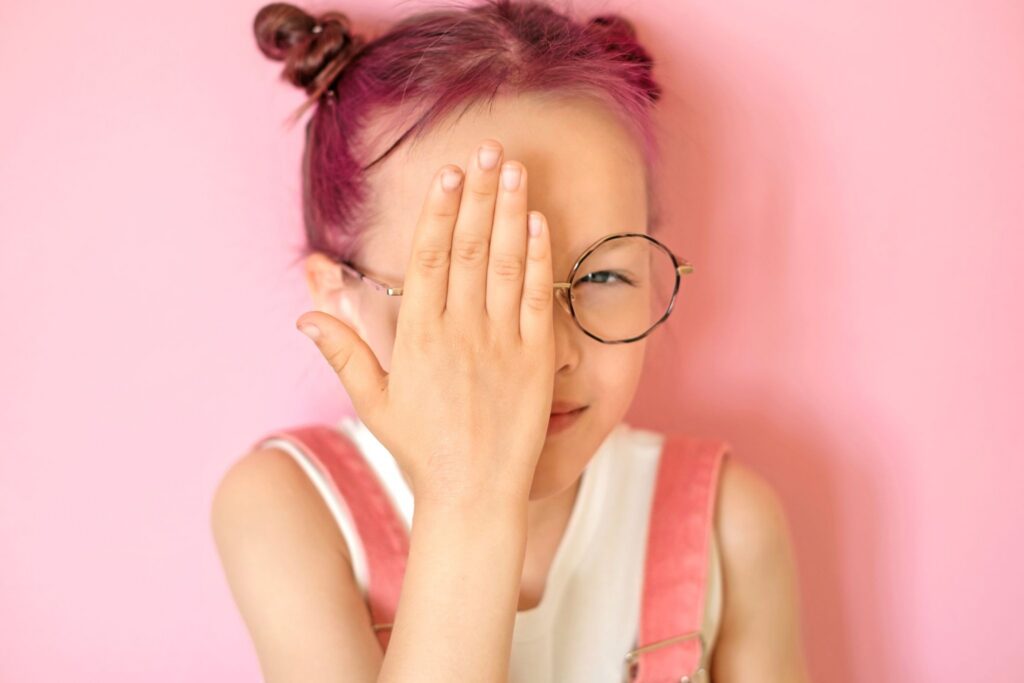
Myopia occurs when the eye grows too long from front to back, causing light to focus incorrectly on the retina.
This results in blurry distance vision.
Children with myopia may:
- Squint to see far-away objects
- Sit very close to screens or books
- Need frequent prescription changes
The key issue isn’t just blurry vision, it’s eye growth.
When the eye elongates, it permanently changes shape.
Why Can’t Child Myopia Be Reversed?

To understand why the answer to “can child myopia be reversed” is no, we need to look at biology.
1. Structural Changes in the Eye
Myopia is caused by physical elongation of the eyeball, not just a temporary focusing problem. Once the eye grows longer, it cannot naturally shrink back.
2. No Current Medical Cure
There is currently no clinically proven method to reverse this elongation in children or adults.
3. Focus Has Shifted to “Control,” Not Cure
Modern eye care focuses on myopia control, which means slowing progression rather than reversing it.
The Good News: Myopia Can Be Controlled
Even though we can’t reverse myopia, we can slow it significantly.
That’s a big deal.
Slowing progression reduces the risk of serious eye diseases later in life, including:
- Retinal detachment
- Glaucoma
- Myopic macular degeneration
Proven Treatments That Help (Backed by Research)
1. Atropine Eye Drops
Low-dose atropine is one of the most studied myopia treatments.
- Proven to slow myopia progression in children
- Supported by strong clinical evidence, including large studies like LAMP
- Works by reducing excessive eye growth
Some studies show:
- Up to 50–60% reduction in progression with low-dose use
This makes atropine one of the most effective non-invasive options available.
2. Orthokeratology (Ortho-K Lenses)
Ortho-k lenses are worn overnight to gently reshape the cornea.
- Can slow myopia progression by ~50%
- Allows clear daytime vision without glasses
- Works by changing how light focuses on the retina
It’s especially effective when started early, around ages 6–8.
This happens to be our specialty.
3. Combination Therapy
Some children benefit from combining treatments.
For example:
- Ortho-k + atropine
- Special lenses + atropine
Research shows combination therapy may:
- Further reduce eye growth
- Improve outcomes in fast-progressing cases
4. Specialized Glasses & Contact Lenses
New lens designs (like DIMS lenses) help reduce myopia progression by altering peripheral focus.
- Designed specifically for myopia control, not just correction
- Often used when contact lenses aren’t ideal
Can Myopia Ever Improve on Its Own?
This is where things get a little nuanced.
- In rare cases, children’s prescriptions may stabilize or slightly improve
- However, this is not true reversal of myopia
Most children:
- Continue progressing until their mid-teens
- Reach a plateau around age 16
Why Early Treatment Matters So Much
If you’re still wondering “can child myopia be reversed,” the better question is:
How early can we slow it down?
Here’s why timing matters:
- Myopia progresses fastest in younger children
- Early intervention can significantly reduce final prescription strength
- Lower prescriptions = lower lifetime risk of eye disease
Some guidelines suggest myopia control can reduce progression by up to 60% with early action
Lifestyle Changes That Support Myopia Control
While treatments are key, daily habits also play a role.
Encourage More Outdoor Time
- Exposure to natural light helps regulate eye growth
Limit Excessive Screen Time
- Prolonged near work may contribute to progression
Follow the 20-20-20 Rule
- Every 20 minutes, look 20 feet away for 20 seconds
These won’t reverse myopia, but they can support treatment efforts.
When Should You See a Specialist?
If your child:
- Has rapidly changing prescriptions
- Complains of blurry distance vision
- Is under age 10 with myopia
…it’s time to explore myopia management options.
Take Action Early With Expert Care
If you’re asking “can child myopia be reversed,” the next step is clear: don’t wait.
While reversal isn’t possible, early, expert treatment can make a life-changing difference.
Visit us to:
- Schedule a pediatric myopia consultation
- Learn about ortho-k and advanced treatments
- Get a personalized plan for your child
The earlier you act, the better the outcome.
How to Choose the Right Treatment for Your Child
Every child is different. The best treatment depends on:
- Age
- Prescription strength
- Rate of progression
- Lifestyle preferences
General Guidelines:
- Younger children: Start early with ortho-k or atropine
- Fast progression: Consider combination therapy
- Non-contact preference: Use specialized glasses
A qualified eye care provider can guide this decision.
Final Answer: Can Child Myopia Be Reversed?
Let’s bring it all together.
No, child myopia cannot currently be reversed.
But that doesn’t mean you’re out of options.
Modern treatments can:
- Slow progression by up to 50-60%
- Reduce long-term risks
- Preserve your child’s vision for the future
Key Takeaways
- Myopia is caused by permanent eye growth
- It cannot be reversed with current treatments
- It can be effectively slowed
- Early intervention is critical
- Options like atropine and ortho-k are scientifically proven
Take Action Now
Don’t wait for your child’s vision to worsen.
Contact us today to schedule an appointment and protect your child’s eyesight for years to come.